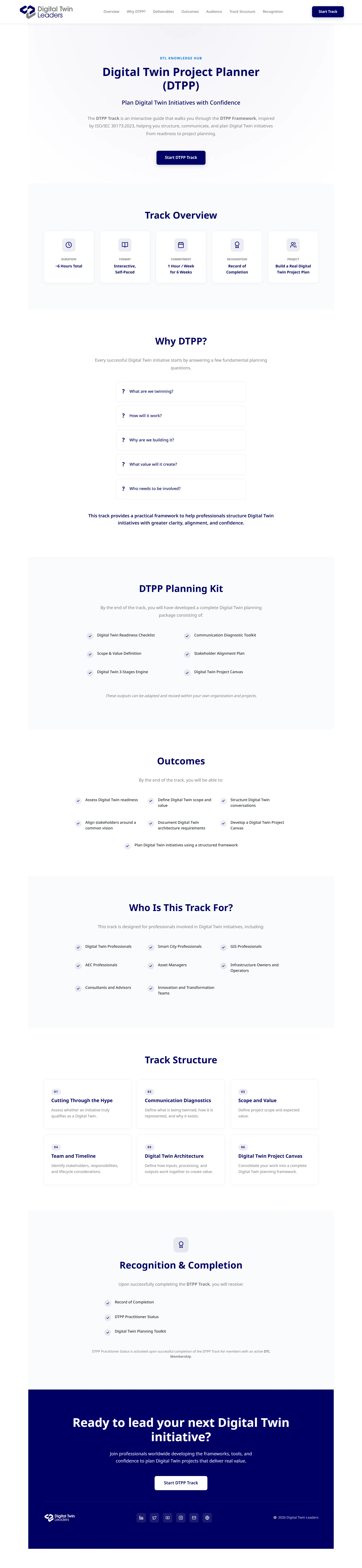
An existing Moodle, tested and trusted.
We audited a live Moodle 5.2 site for Digital Twin Leaders, proved its backup restores, rebuilt a cohort notification plugin, moved email to ZeptoMail and put Moodle AI grading to the test with a deliberately wrong answer.
Digital Twin Leaders runs a Moodle 5.2 learning platform for its global community of digital twin professionals. We audited the site, restored a fresh backup in isolation with no missing files, rebuilt its chapter notification plugin so emails reach the right cohort once, moved mail to Zoho ZeptoMail with DKIM, and tested its AI grader: a relevant answer scored 100/100, an unrelated recipe 0/100.
A live Moodle that worked, but that nobody could fully vouch for.
Digital Twin Leaders is a global professional community for people who build and run digital twins. Its members learn on a Moodle 5.2 platform with tracks such as the Digital Twin Project Planner. The site was already live, with a RemUI theme, commercial plugins, a custom notification plugin, scheduled tasks and outside services. The client didn’t want a rebuild. They wanted evidence: would a backup restore, why did chapter emails reach the wrong learners or arrive twice, was email dependable, did the AI grader actually judge answers, and who owned what? We treated each question as a separate requirement and answered it with a test.
A structured audit of what was installed, who owned it and what carried risk.
We reviewed Moodle administration, hosting and domain dependencies, every installed plugin and its licence, custom code, scheduled tasks, the database and file storage, email services and recovery arrangements. We also asked the question many Moodle owners skip: could someone else maintain this site if the original developer disappeared? Findings went into a prioritized report that keeps what we verified separate from what we recommend, because naming a risk is not the same as fixing it.
We proved the backup restores by restoring it, not by trusting it.
A Moodle backup is only useful if it restores. We took a fresh export of the live site’s three parts, the application code, the database and the moodledata file store, and restored them in a separate, restricted test environment, never on the live LMS. We then checked the restored database structure, the Moodle bootstrap, database connectivity and every file the database referenced. No referenced files were missing, so the essential parts of the site can be rebuilt away from its production server. This was an application-level recovery test, not a promise of zero downtime or proof that every user journey works. A long-term recovery plan still needs scheduled off-site backups, monitoring and periodic full restore drills.
Chapter emails now reach the right cohort, once.
The custom Chapter Notify plugin emailed learners as each course chapter opened, but it picked recipients from the whole course instead of the intended group, and saving its settings reset the “already sent” records, so learners could get repeats. We read its source, scheduled task and settings flow, then shipped a focused update, Chapter Notify v1.1.0, without touching Moodle core. We tested it in isolation, kept the existing notification settings, backed up and deployed. A live test email reached the client, and a repeat run sent nothing, proving the duplicate protection. We switched it on for one approved cohort first so live sending could be watched before it was widened; scheduled delivery still needs log checks, especially after membership or timing changes.
- Cohort targeting: notifications go to the intended Moodle group, not the whole course.
- Separate chapter schedules: administrators manage the sequence of chapter emails for each cohort.
- Per-recipient delivery records: every notification outcome is logged for review.
- Duplicate prevention: a notification already processed is not sent again if a task runs twice.
- Administrative controls: delivery-status pages, cohort management and a global delivery switch.
- Manual learner assignment: cohort membership stays under administrator control, as the client chose.
Moodle email moved to a transactional service with DKIM.
Course email fails quietly when it comes from an unauthenticated server, because Gmail and Yahoo now reject mail that fails SPF or DKIM checks. We set Moodle to send through Zoho ZeptoMail over authenticated SMTP with TLS and verified the sending domain, including DKIM and bounce-domain DNS records. Then we sent a real chapter notification and confirmed it arrived. We also repaired the RemUI HTML email template: local social icons instead of broken hotlinked ones, better footer contrast, a white backing behind the logo and a fix for Gmail’s dark mode. Final appearance still varies by device and email client, so it should be checked with real inbox screenshots. Moving automated messages to a transactional service also separates them from the organization’s everyday mailbox.
We gave the AI grader a banana bread recipe. It scored zero.
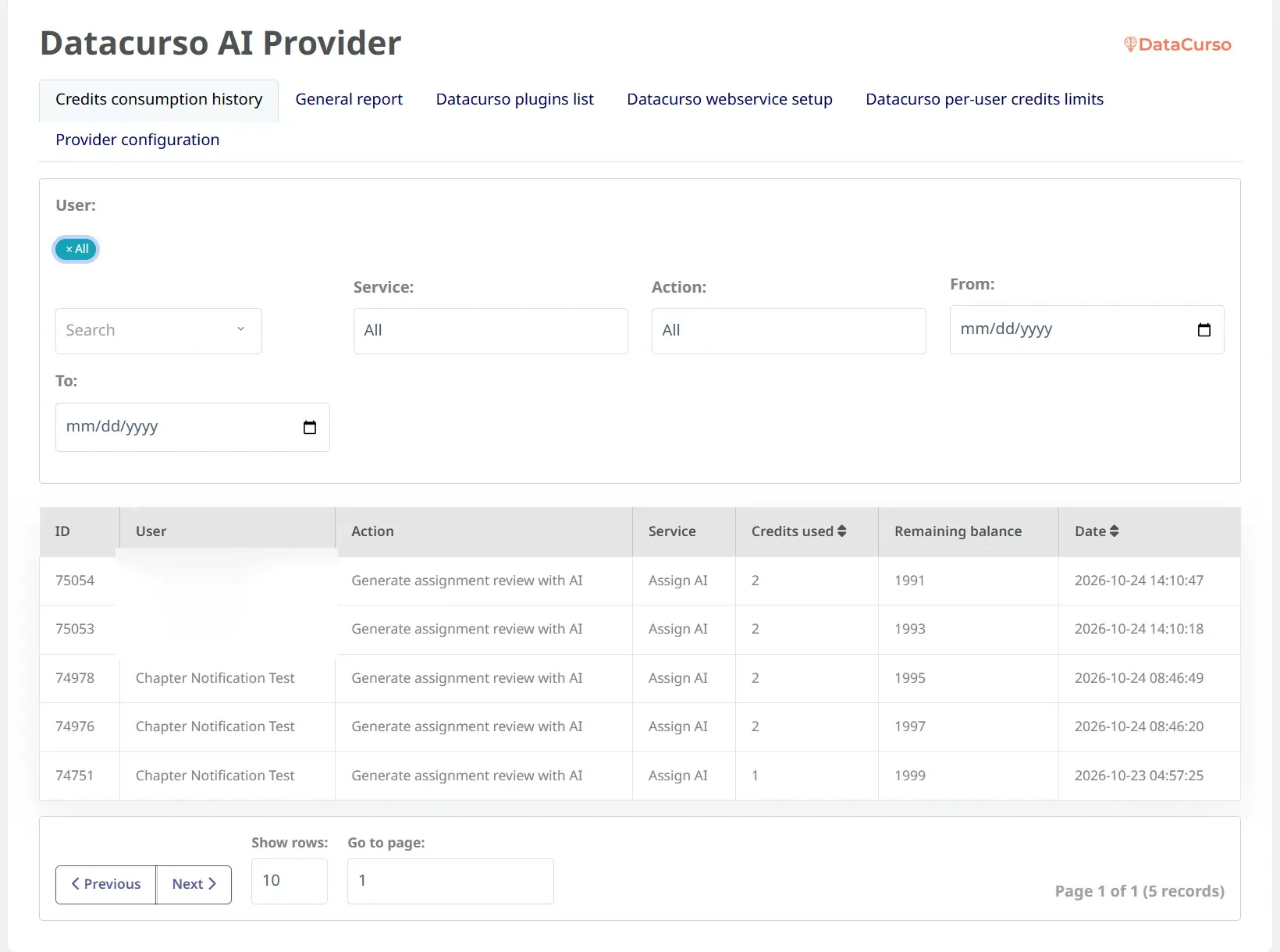
The site uses DataCurso’s Assignment AI to propose grades and feedback, and the client worried it gave every upload full marks. We confirmed the registration service reported an active registration, then tested grading inside Moodle with real PDF submissions against one brief: explain two practical benefits of digital twins with a real example. Both results stayed as proposals awaiting teacher approval, not silently published to the gradebook. Two tests don’t establish accuracy for every course or rubric, but they give clear evidence for this assignment: the tool did not award full marks to everything. We also documented duplicate rows in the AI review screen as a separate follow-up, not as resolved.
- Relevant digital twins document: proposed 100/100, with positive feedback on the topic and the example given.
- Unrelated banana bread recipe: proposed 0/100; the AI identified it as a recipe that did not address digital twins and asked for resubmission.
Cleaner access and a handover the next developer can follow.
Alongside development and testing, we reviewed administrator access, server access and the technical information needed for future maintenance. As part of an agreed access clean-up we removed two legacy server keys and verified the result, preserving the client’s own access rather than making risky changes without a fallback. The handover covers what we checked, what we changed, how to operate the chapter notification system and which security or maintenance tasks should come next. On a customized Moodle, a good handover makes future changes easier instead of leaving the next developer guessing.
Inspect, isolate, change, test, document.
The work followed a repeatable approach. First we inspected existing behavior and gathered evidence from Moodle settings, plugin code, database records and logs. Next we tested high-risk scenarios in an isolated environment wherever possible. For production changes we prepared backups and kept each update focused on the affected component. Finally we checked the result through real user-facing workflows and documented what the evidence did, and did not, prove. On an established LMS this reduces the chance of introducing unrelated problems and makes every change easy for the client to understand.
What comes next for a growing Moodle platform.
The work also identified sensible next-phase improvements. These are recommended follow-up items, not features we claim to have finished in this engagement. For training providers the lesson is simple: Moodle reliability comes from clean custom development, tested recovery, dependable communication, evidence-based integrations and clear documentation, and each one supports the others.
- Formalize automated off-site backups and regular recovery drills.
- Tighten file permissions and integration access under an approved change plan.
- Bring all customizations into consistent version control.
- Check scheduled notification logs after live runs.
- Investigate the duplicate entries in the AI review screen.
A documented Moodle with evidence for every answer.
Digital Twin Leaders now has a better-documented Moodle with an independently tested restore, a revised cohort-based notification plugin, verified transactional email that reaches inboxes, a cleaner email template and clear evidence that its AI grader can tell relevant from irrelevant work. The platform was improved, not rebuilt, and live learning carried on throughout.
| Area | What we verified |
|---|---|
| Recovery | Code, database and moodledata restored in isolation; no missing referenced files. |
| Notifications | Chapter Notify v1.1.0 live; cohort targeting and duplicate protection passed. |
| ZeptoMail with DKIM and bounce domain verified; a real chapter email received. | |
| Email design | RemUI template icons, contrast and logo fixed; dark mode checked. |
| AI grading | Relevant PDF proposed 100/100; unrelated recipe 0/100 with resubmission feedback. |
| Handover | Ownership map, change record, plugin guide and next-step list delivered. |
Not included: Security hardening, automated off-site backups and the AI review duplicate-row fix were recommended, not delivered in this engagement.
The platform.
Good questions.
It can propose grades, but test it before relying on it. On this Moodle 5.2 site, DataCurso’s Assignment AI gave a relevant digital twin answer 100/100 and an unrelated recipe 0/100, with feedback explaining why. Keep teacher approval on, and test with good, partial and off-topic answers against your own rubric.
Restore it. Take a fresh copy of the code, the database and moodledata, restore all three in an isolated environment, and check that Moodle boots, connects to its database and finds every referenced file. Repeat the drill on a schedule: a backup that has never been restored is still an assumption.
Usually because Moodle sends from a server that fails SPF or DKIM checks, which Gmail and Yahoo now reject. Send through a transactional email service over authenticated SMTP, publish its DKIM and SPF records for your domain, then confirm with a real message, not just the settings page.
Not well out of the box: standard notifications are per course or activity. A custom local plugin can hold a chapter schedule for each cohort, record delivery for every learner and refuse to send the same message twice. Chapter Notify v1.1.0 does this for Digital Twin Leaders.
Yes. Most problems on a live Moodle can be fixed with a focused audit, plugin updates and configuration changes. The safe order: inspect current behavior, reproduce the change in an isolated copy, back up, deploy, then verify with a real user workflow.
Read this first.
What we’ve written on this, from real projects.
Want something like Digital Twin Leaders?
Three taps and your brief is half written. No email needed until you choose to send it.
What we did here.
The services behind this project, each with its own page.
Other case studies.
More projects we’ve built, each with the full story.